


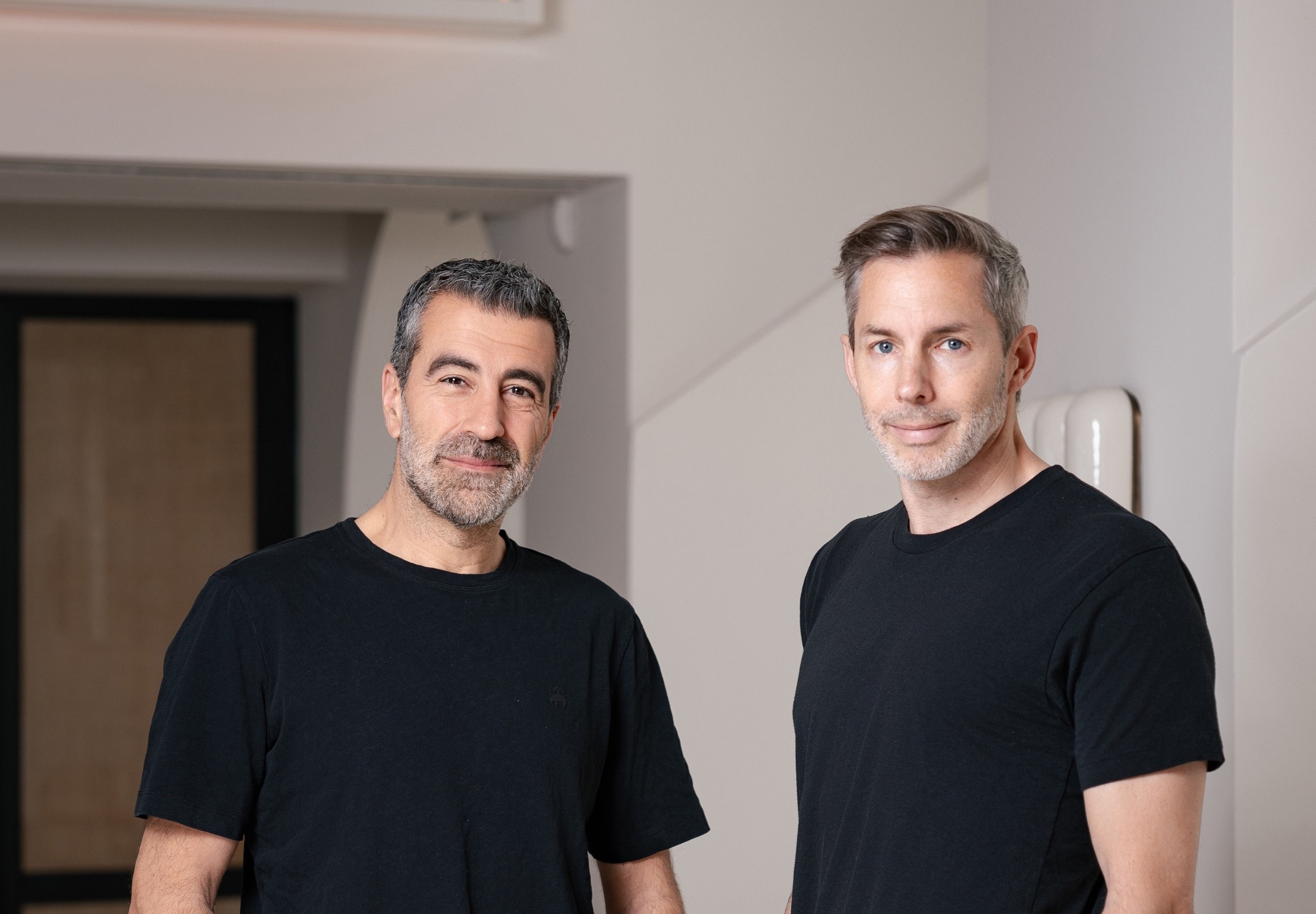
Joram Voelklein and Bulent Altan
March 13, 2026
Four years after first close, Alpine Space Ventures’ Fund I was marked at a strong multiple as of year-end 2025, across seven companies in Europe and the U.S. For a space-focused early-stage fund, that reflects standout performance at this stage of the fund’s life. Instead of chasing hype cycles and downstream applications, the team is committed to building the foundations first.
Now, Alpine Space Ventures is scaling that playbook with Fund II, targeting €280m to double down on satellites, components, ground segment, and data infrastructure, what the team calls infrastructure-first, grounded in near- to mid-term demand. The approach remains concentrated and operator-led, rooted in deep technical conviction and products that already have a market.
At the helm are Joram Voelklein, who brings a finance-first perspective sharpened by years in emerging technologies and Bulent Altan, who brings hard-won operational experience from building hardware at SpaceX and scaling optical communications at Mynaric. Together, they’re focused on ensuring that the industrial base exists to support whatever comes next.
Join us for a deep dive with Joram and Bulent as they share how Alpine Space Ventures is betting on space infrastructure and give us a glimpse of where we’re going.
About Bulent Altan
Bulent Altan is Founding Partner at Alpine Space Ventures and former CEO of Mynaric. He began his aerospace career at SpaceX in 2004, where he held senior engineering and executive roles for over a decade, including Vice President of Avionics, overseeing avionics, software, and guidance, navigation and control systems for Falcon rockets and Dragon capsules. He later returned to SpaceX as Vice President of Satellite Mission Assurance for the Starlink constellation and has also held leadership roles at Airbus Defence and Space and TechFounders. Drawing on two decades of hands-on experience across launch, satellites, and optical communications, Bulent now supports space infrastructure startups with deep operational and technical expertise.
About Joram Voelklein
Joram Voelklein is Founding Partner at Alpine Space Ventures. Joram has been at the forefront of emerging industries for over a decade. He was involved with Mynaric from early on and supported the company through its growth and public-market journey. He later became an early investor in Isar Aerospace in 2018, backing the company as it grew into one of Europe’s leading NewSpace players. His track record reflects a consistent ability to identify and support high-potential companies in capital-intensive frontier markets.
About Alpine Space Ventures
Alpine Space Ventures is a European-based, operator-led early-stage space VC investing across Europe and the U.S. The firm focuses on infrastructure across satellites, critical components, ground segment, power systems, communications, and data infrastructure. Joram Voelklein and Bulent Altan are currently raising Fund II to scale the same concentrated, operator-led strategy.
Making long-term bets with incomplete information
Joram is candid about the realities of investing in capital-intensive frontier technologies. Long-term bets, he says, are always made with incomplete information. This is because “you’re making decisions when key elements are still fluid or aren’t even fully understood,” he says.
To invest successfully in this space, you have to “anticipate market developments that aren’t directly tied to your investment, defense spending trends, regulatory shifts, launch cost projections.”
He points to Europe’s structural shift in defense spending as a prime example. With governments ramping up budgets and Germany allocating tens of billions toward space defense, the opportunity is clearly expanding, but so is complexity. “You have to anticipate which programs will actually get funded, on what timelines, and how that filters down to suppliers,” Joram explains.
For Alpine Space Ventures, this macro awareness is inseparable from company-level diligence.
Just as important is capital strategy. Joram has seen too many technically brilliant teams stumble because their fundraising plans didn’t match their development timelines. “In Deep Tech, a sound fundraising strategy and burn control are just as critical as the technology itself,” he explains.
When asked about making early bets, Bulent says, “the metrics that matter early aren't revenue, it's customer concentration and contract structure. A single anchor customer with a multi-year development contract de-risks more than 20 small proof of concepts. For manufacturing, the critical metric is gross margin trajectory as you scale, not absolute revenue.”
This is why Alpine Space Ventures looks for optionality, especially in dual-use companies that can tap commercial VC, defense primes, strategic corporations, and public markets. In fact, “that flexibility is a form of risk management,” he states, and it’s therefore “something we actively look for.”
“Dual-use companies can access commercial VC, defense primes, strategic corporates, and public markets while riding out procurement cycles.” – Joram Voelklein
Building the layer beneath the hype
Joram and Bulent don’t dismiss ideas like data centers in space, a lunar economy, or in-orbit manufacturing, but Alpine Space Ventures isn’t investing directly into those applications today. In his view, most of these themes will be driven by SpaceX, and the 10–20 year timeline is simply too far out. Instead, the fund focuses on the supply chain for whatever comes next.
Today, the firm looks at what every future scenario has in common. In this case, they identified a need for a functioning Space Industrial Base.
Europe still lacks independent, cost-competitive launch capacity at scale, and beyond launch, the supply chain remains fragmented and expensive. Components need to be produced more cheaply, manufacturing infrastructure needs to scale, and testing facilities have to keep pace with rising demand.
Fund I reflects that philosophy. “We invest in satellite buses, pressure vessels, propulsion systems, solar panels, thermal imaging and ground stations,” says Bulent, the fundamental building blocks that any next-generation system will require, whether the end application is Earth observation, connectivity, or something not yet imagined.
Fund II goes further, doubling down on this infrastructure layer. The goal is to enable multiple futures, rather than betting on a single narrative about what space should become.
“The real opportunity is the supply chain. Our portfolio companies like Blackwave and Reflex aren't sexy pitches, but they're mission-critical infrastructure with clear product-market fit because incumbents can't deliver at the cost or performance new space requires.” – Bulent Altan
Isar Aerospace showed the gap and the opportunity
One of the formative investments for both Joram and Bulent came before Alpine Space Ventures even existed, their early backing of Isar Aerospace in 2018. They both invested because “the founding team, Daniel Metzler and Josef Fleischmann, was very convincing, combining a bold vision with strong execution capability,” shares Joram.
From the start, Isar Aerospace’s leadership understood the brutal realities of launch. “They weren’t naive about the challenges—development timelines, capital requirements, they had a clear plan,” says Bulent.
While SpaceX had proven the economics of reusable launch, Europe lacked independent access at competitive prices, especially for dedicated small-satellite missions.
Legacy primes were built for a different era and couldn’t cost-compete, “Isar Aerospace saw that gap and positioned themselves smartly” building a small-lift vehicle optimized for flexibility and affordability.
For Joram and Bulent, the investment opened their eyes to the bigger picture. Europe didn’t just need rockets, it needed an entire industrial ecosystem capable of supporting NewSpace at scale. That realization became the backbone of Alpine Space Ventures’ fund thesis, steering them toward supply chain investments that could unlock growth across the sector.
“The investment in Isar Aerospace shaped most of our fund thesis around backing the Space Industrial Base.” – Joram Voelklein
In Deep Tech, staying private longer is often the better path
In Deep Tech, Joram argues, public markets are often a poor fit especially if they decide to exit too early. He’s seen founders rush toward IPOs for validation or liquidity, only to find themselves trapped by quarterly earnings expectations before their technology or revenues are truly ready.
Space companies, in particular, create value through longer arcs by building flight heritage, securing anchor customers, and scaling manufacturing.
Strategic acquisitions by defense primes or vertical integration by customers who need to own critical supply chains are far more common and far more aligned with how these businesses mature.
Joram’s advice to founders is to stay private while you’re still in high-risk iteration mode. Use that time to build a moat through customer lock-in and operational scale. Only consider public markets once you’re approaching stability or be prepared for acquisition from a position of strength. Going public too early, he warns, forces short-term decisions that can undermine the long-term technical bets required to win in frontier industries.
Having worked as an operator in space tech, Bulent argues that “frontier founders need to understand that technical milestones must align with fundability milestones. The founders who thrive treat fundraising as a design constraint, not an afterthought.”
“Build your moat: flight heritage, customer lock-in, manufacturing scale, then go public from strength, or get acquired at a premium.” – Joram Voelklein
Capital efficiency per unit of risk reduction
Beyond team quality and market size, the Alpine Space Ventures team look at how efficiently a startup reduces risk with each dollar raised. Joram calls it “capital efficiency per unit of risk reduction,” and it’s become a core lens for evaluating early-stage companies.
The strongest founders, he says, don’t try to solve everything at once. They identify the single biggest uncertainty in their business, technical, commercial, or operational, and design experiments to address it first, using the minimum viable capital. This ruthless sequencing of risk is what allows companies to survive long development cycles without burning themselves out.
It’s also what drove Fund I’s performance. Alpine Space Ventures’ most successful portfolio companies showed these traits early. They were realistic about timelines, deeply customer-focused, and disciplined about capital deployment. That combination, more than any single breakthrough, is what has underpinned Fund I’s strong performance mark to date in a notoriously difficult sector.
“Our performance comes from companies that were capital efficient, customer focused, and realistic about their business model and timelines.” – Joram Voelklein
Lessons from SpaceX to the boardroom
In comparison to Joram, Bulent brings a distinctly operator-centric mindset to investing, shaped by years inside SpaceX. One of the most transferable lessons, he says, is a bias toward building and testing real hardware as early as possible.
“At SpaceX, we'd often choose the "good enough" solution that could fly in 6 months over the optimal solution needing 18 months and then iterate to perfection a working system.” he says, because integration problems surface faster when you’re working with tangible systems.
But that approach only works if iteration is affordable. SpaceX could explode prototypes because each one cost tens of millions, not hundreds. “When your prototypes cost so much you can only build one, you’ve lost the speed advantage,” he states. For this reason, he describes looking for “founders maniacally focused on unit economics from day one.”
Vertical integration, in Bulent’s view, isn’t ideological, it’s practical. At SpaceX, “if suppliers couldn’t meet cost, schedule, or performance requirements, we brought critical capabilities in-house.”
His experience at Mynaric added another layer of realism: “Hardware timelines are unforgiving in ways software isn’t. You can’t patch physics.”
A six-month delay on a custom optic can ripple through an entire program, pushing burn rates into dangerous territories. Today, Bulent pushes founders to “bake contingency into every milestone,” align burn with customer progress, not just technical demos, and tackle long-lead items like thermal management and radiation-hardened components early.
“The companies that survive have customers willing to pay for the 80% solution while they perfect the 100% version.” – Bulent Altan
Founders need pattern recognition
Moving from operator to investor came with surprises. The biggest, Bulent says, was realizing how much founders depend on pattern recognition from their investors. When data is ambiguous and stakes are high, experienced judgment can matter just as much as funding.
That insight shapes how Alpine Space Ventures structures its board involvement. Rather than generic oversight, Bulent focuses discussions on specific technical or strategic questions where the firm can add real value.
He’s also deliberate about board composition, ensuring at least one member has deep domain expertise. Too many boards, he’s seen, become unproductive because investors don’t understand the underlying technical constraints.
At Alpine Space Ventures, Bulent says that they “keep reporting focused on metrics that actually drive decisions”. For him, empathy for founders means respecting the complexity of their challenges, and designing governance structures that help rather than hinder progress.
“We ensure at least one board member has deep technical context.” – Bulent Altan
Space meets data: edge compute, optical links, orbital intelligence
As constellations generate petabytes of data each day, Bulent is aware that “the bottleneck isn’t data generation, it’s transmission and processing at the edge.” Downlinking everything to Earth and then backhauling it to cloud data centers simply doesn’t scale economically.
The future, he believes, lies in onboard processing. For this to happen, he states that “satellite avionics need to look like edge servers with GPU capability, radiation tolerance, and advanced thermal management.” Add optical inter-satellite links, and constellations start to look like distributed data centers in orbit, sharing information in real time and downlinking only actionable insights.
In his eyes, “space-based compute is technically challenging but doable.” He draws parallels to satellite internet a decade ago. It seemed impossible until Starlink changed the cost equation. His bet is that niche commercial space compute clusters will emerge within five to seven years, with broader viability in a decade or more, assuming power and thermal challenges are solved at scale.
“I’d bet on niche commercial clusters in 5–7 years, general-purpose in 10–15.” – Bulent Altan
Biotech in space
Joram takes a similarly pragmatic view of space-enabled biotech. In this space, he sees “several promising approaches in biotech taking advantage of microgravity environments, 3D-printed organs, protein crystallization for drug discovery, tissue engineering,” and more will certainly come.
But he notes that “we have yet to see big pharma budgets allocated to space in a meaningful way.” Right now, “the economics don’t work yet” and the obstacles are both economic and technical. Launch costs, mission duration, and sample return cycles make iteration expensive and slow.
He doesn’t see space-enabled biotech taking off “until we have Starship-class economics, persistent orbital platforms with power and thermal management, and routine access, most of this remains niche applications or research programs.”
Once again, Alpine Space Ventures’ strategy circles back to infrastructure. When orbital biotech eventually scales, Joram believes it will rely on the same fundamentals his portfolio companies are already building power systems, communications, and hardened computing.
“Our thesis is to invest in the infrastructure layer that will enable next-generation applications including biotech.” Joram Voelklein
Where industries collide
Space data centers, AI-driven Earth observation, and orbital biotech may sound like separate worlds, but Joram sees them converging around the same core challenges: energy harvesting, radiation-hardened computing, and high-bandwidth communications.
A central topic for the next few years is “space-based data centers as the backbone for AI,” he says. “The spillover is energy harvesting in space. Many technological challenges have to be solved before we'll see systems that meet the visions discussed on X and elsewhere, power generation at scale, thermal management in vacuum, radiation-hardened compute infrastructure.”
“Another spillover,” he says “is edge compute and autonomy. AI workloads are moving to where the data is generated—satellites processing imagery onboard, constellation networks optimizing routing in real time. This requires satellite avionics to evolve into edge servers with serious GPU capability and low-power AI inference.”
In Bulent’s opinion, “VCs systematically overindex on downstream applications, satellite data analytics, Earth observation platforms, while underinvesting in the industrial base that makes any of that possible. Everyone wants to fund the "SpaceX of [insert application]," but nobody wants to fund the companies making components companies like SpaceX need at scale.”
For Alpine Space Ventures, this reinforces their core conviction.
“The ramp-up of the Space Industrial Base is the common denominator across all these futures” – Joram Voelklein
Quick-fire round
A tool you can’t live without?
Joram: “Evernote. I’ve used it for over a decade to capture everything from meeting notes to half-formed investment theses. It’s my external memory.”
How do you recharge?
Bulent: “Playing pinball on my Iron Maiden machine. The physicality and unpredictability are a welcome contrast to venture capital.”
Advice that stuck:
Joram: “Figure out what society wants but does not yet know how to get it.”
Founder or start-up that you admire:
Bulent: “Ubiquiti Networks. Robert Pera’s vertical integration and ruthless focus on unit economics enabled an entire generation of wireless ISPs, a “picks and shovels” strategy that I believe space infrastructure desperately needs.”
While much of venture capital gravitates toward glossy applications and downstream platforms, Alpine Space Ventures is doing the quieter work of funding pressure vessels, propulsion systems, optical links, power generation, and ground infrastructure.
In a sector shaped by long timelines and high uncertainty, Alpine Space Ventures’ operator-led approach offers something rare, conviction grounded in execution. The space economy will be built on hardware, realism, and we need to build an industrial base that is strong enough to carry tomorrow.
If you’re a founder building mission-critical space infrastructure, reach out to Alpine Space Ventures via their website. Joram and Bulent regularly attend trade shows and host masterclasses. Follow Alpine Space Ventures on LinkedIn or visit their website to stay updated on upcoming events.