


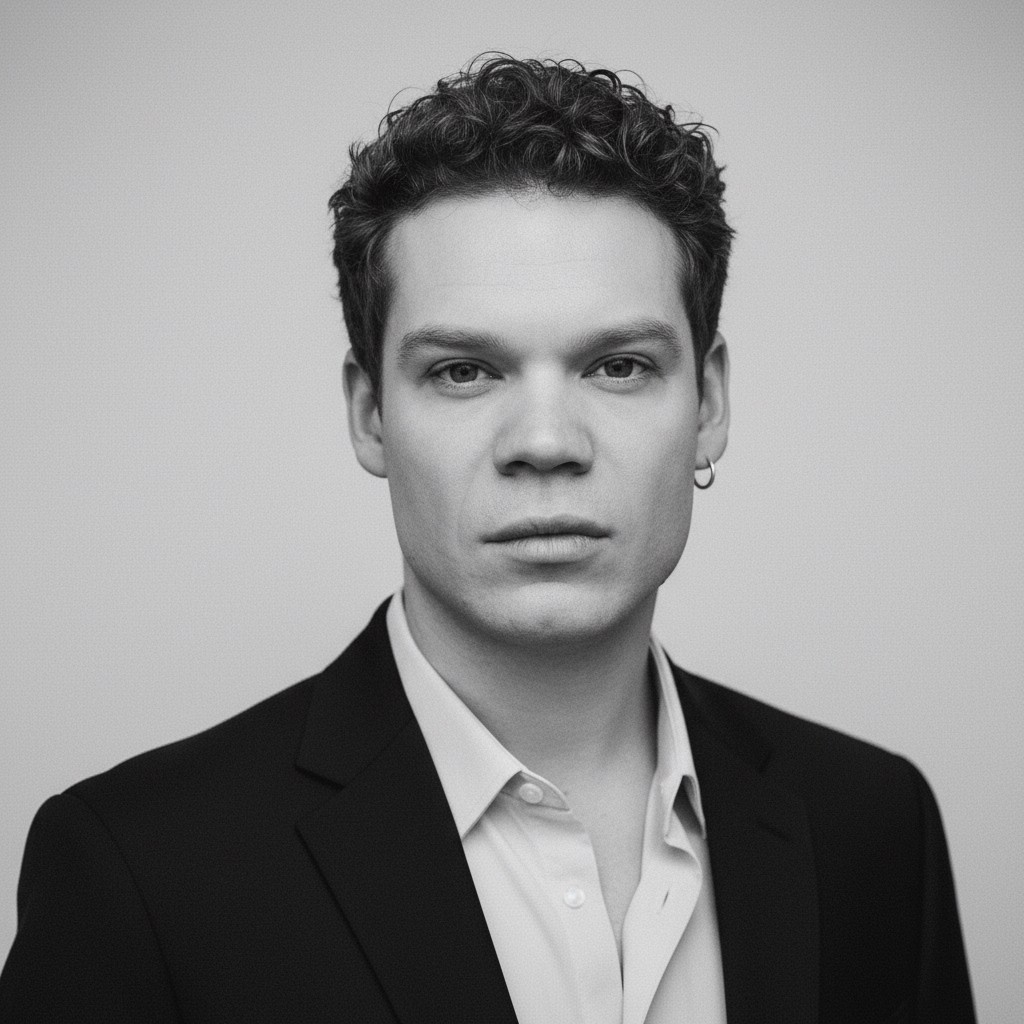
Julian Philipp Nagel
November 28, 2025
From early false starts in travel and hospitality during Covid to rethinking how sales teams work with AI, Julian Philipp Nagel’s path reflects both resilience and reinvention. Today, his company – Along AI – is building “agent squads” that strip away the repetitive tasks sellers shouldn’t have to do, freeing them up so they can focus on conversations that close deals. His story is a reminder that setbacks can fuel innovation—and that in the world of AI, culture matters just as much as code. Join us as we unpack the pivots, the lessons, and the vision behind Along AI.
About Julian Philipp Nagel
Julian Philipp Nagel is a lifelong builder, inspired early by his architect parents and a love of creating from scratch. After studying in the U.S. on a soccer scholarship, he co-founded multiple ventures with his brother Freddie, learning to run distributed teams across Europe and America. Today, he balances U.S. sales with European product teams, guided by discipline, running, and meditation. For Julian, pressure is a privilege—struggles fuel the satisfaction of building tools that give people back their time.
About Along AI
Along AI helps sales teams win back time by automating the busywork that clogs their day. Born out of pandemic pivots, the platform evolved from collaboration tools into agent squads that handle CRM updates, follow-ups, and other repetitive tasks. Workflows start human-in-the-loop, then move toward autonomy as trust grows. With U.S. go-to-market and European engineering, Along AI’s vision is clear: one digital assistant that takes care of the grind so sellers can focus on closing deals.
From soccer scholarship to startup founder
Julian’s journey began on a soccer pitch. After growing up in Germany, he came to the U.S. on a soccer scholarship, studying and competing in New York City. “It was a bit out of the blue,” he recalls, “but it shaped how I approach challenges—show up, commit, and adapt.”
Even as a student, he was drawn to building things. Together with his brother, Frederik, and friends, he launched their first startup, Mepadi – a fashion brand – working remotely before remote work culture was mainstream. “This was 2010. Remote work wasn’t a thing yet, but we were already figuring it out from different locations,” he says.
Those early lessons in distributed teamwork and storytelling laid the groundwork for everything that followed.
Reinvention in lockdown
Like many pandemic-era founders, Julian’s story took unexpected turns. Before COVID, he and his brother, co-founder Frederik, were building a company in the travel and hospitality sector. They had just raised funding to create a platform legitimizing Airbnb sublets when lockdowns brought travel to a standstill. “We signed a term sheet, and two weeks later the world shut down.”
Rather than fold, they experimented. They created retail-in-hospitality, partnering with furniture and CPG brands to furnish apartments with products that guests could try, test, and buy. The model worked for a few months—until the second lockdown brought it to a halt again.
But in those pivots came clarity. Conversations with interior designers revealed a broader pain: miscommunication, inefficiency, and friction between clients and service providers. That universal problem became the seed of what would become Along AI.
“Constraint was our compass. Every dead end forced us closer to the real problem worth solving.”
Identifying the bottleneck
At its core, Along AI addresses a truth Julian discovered through dozens of conversations: most salespeople spend over half their time on tasks that don’t actually involve selling.
“They’re paid to generate revenue,” Julian explains, “but their days get consumed by updating CRMs, chasing data, and copy-pasting information from one system to another.”
He calls it “non-selling work”—necessary tasks, but ones that steal energy from the conversations that close deals.
“Over 50% of sales reps’ time is lost to tasks that don’t generate revenue. We want to change that.”
Agent squads
Along AI’s answer is elegant: Agent Squads. Each agent is designed to handle a specific workflow, such as CRM updates, meeting preparation, or personalized follow-ups. Together, they form a team of digital helpers that sit alongside the human seller and can be built out further by the users
The key, Julian emphasizes, is trust. “We don’t replace people—we free them. Initially, agents request approval. Once they’ve proven they can handle the task consistently, you can let them run with it.”
This progression—from human-in-the-loop to autonomy—makes adoption a natural process. Salespeople stay in complete control until they’re confident the agents can take over—the result is that hours are saved each week, for more and better conversations as well as cleaner systems.
Navigating two cultures: The U.S. and Europe
Building a company across continents has taught Julian that culture matters just as much as product. In Germany, he explains, if a startup claims to have a feature, then it means the feature is live. In the U.S., salespeople may claim to have it when it’s still in development, because everyone assumes “yes” actually means “almost there.”
He laughs when he recalls learning this nuance the hard way: “In the U.S., people discount what you say by 50%. If you say you have an integration, they know you probably don’t yet—it’s more about how you phrase it. In Germany, if you say you have it, people expect it’s already shipping.”
For Julian, this cultural shift required adjustment. “In Europe, you can take someone’s words as fact at the end of a call. In the U.S., you have to read the context, not just the statement as communication in the US is a high-context sport” That adaptability, he says, has become one of Along AI’s quiet advantages in selling across both markets.
That duality also gives Along AI an edge. It allows the company to sell into the precision of the Mittelstand of Germany and the optimism of Silicon Valley—two markets with very different rhythms.
“Same demo, two different stories. Learning to read the cultural code is half the job.”
A digital seller
While Along AI today deploys squads of agents, the long-term vision is even bigger. “We want to build a digital version of the seller,” Julian explains. “One intelligent assistant you can talk to via text or voice—that then sends the work to the right agents in the background.”
In that vision, sellers no longer waste hours on admin. Instead, they invest their energy in conversations, negotiations, and relationships that truly matter.
“No one wants to be sold to by a bot,” Julian says. “But everyone wants more time to sell. That’s the gap we’re closing.”
Julian’s drive comes from a deep-rooted love of creating. With two architect parents, he grew up surrounded by design, problem-solving, and the joy of building something from scratch. “When you build a company, you’re making something that wouldn’t exist without you,” he reflects. “That’s purpose.”
This belief that struggle is a privilege—that pressure produces satisfaction—shapes how he approaches the rollercoaster of startup life.
“Without you, the thing you’re building wouldn’t exist. That’s purpose—and that’s why I get up in the morning.”
Quickfire round
Tool you can’t live without:
“My calendar. Honestly, it’s my brain. Everything goes in there—work, workouts, even past events I backfill so I have a complete record.”
Founder/startup you admire:
“Nike, and specifically Phil Knight. His autobiography Shoe Dog really stuck with me. He went through so many bottlenecks—legal battles, financial crises, personal setbacks—but kept running, literally and figuratively. As a runner myself, I connect with that mindset. The brand isn’t just shoes; it’s resilience. That’s what makes it inspiring for anyone building something from scratch.”
Recharge ritual:
“Running is my reset. It clears my head and puts everything in perspective. I also meditate —startup life is a rollercoaster, and meditation flattens the peaks and valleys. Together, running and meditation keep me balanced.”
Advice that stuck:
“When I first came to the U.S. to play soccer, there was a huge sign in the gym: ‘Pain is only weakness leaving the body.’ It’s from the U.S. Marine Corps. At 20, it sounded intense, but over time, I realized how true it is. Growth comes from discomfort. Diamonds form under pressure. For me, the privilege is in the struggle—you appreciate the highs so much more because of the grind it took to get there.”
Along AI is growing fast, and Julian is clear about the priority: people. The company is hiring across product, engineering, and U.S. go-to-market, with a preference for talent in U.S. or European time zones.
He’s looking for builders who believe what he believes: that technology should amplify human skill, not replace it. “Our mission is simple but ambitious,” Julian concludes. “Give people their time back so they can do the work only humans can do.”
Along AI is hiring. If you’re ready to help build the digital seller of the future, connect with Julian or visit Along AI’s careers page. Or, book a demo and stay tuned for more exciting developments coming very soon.