


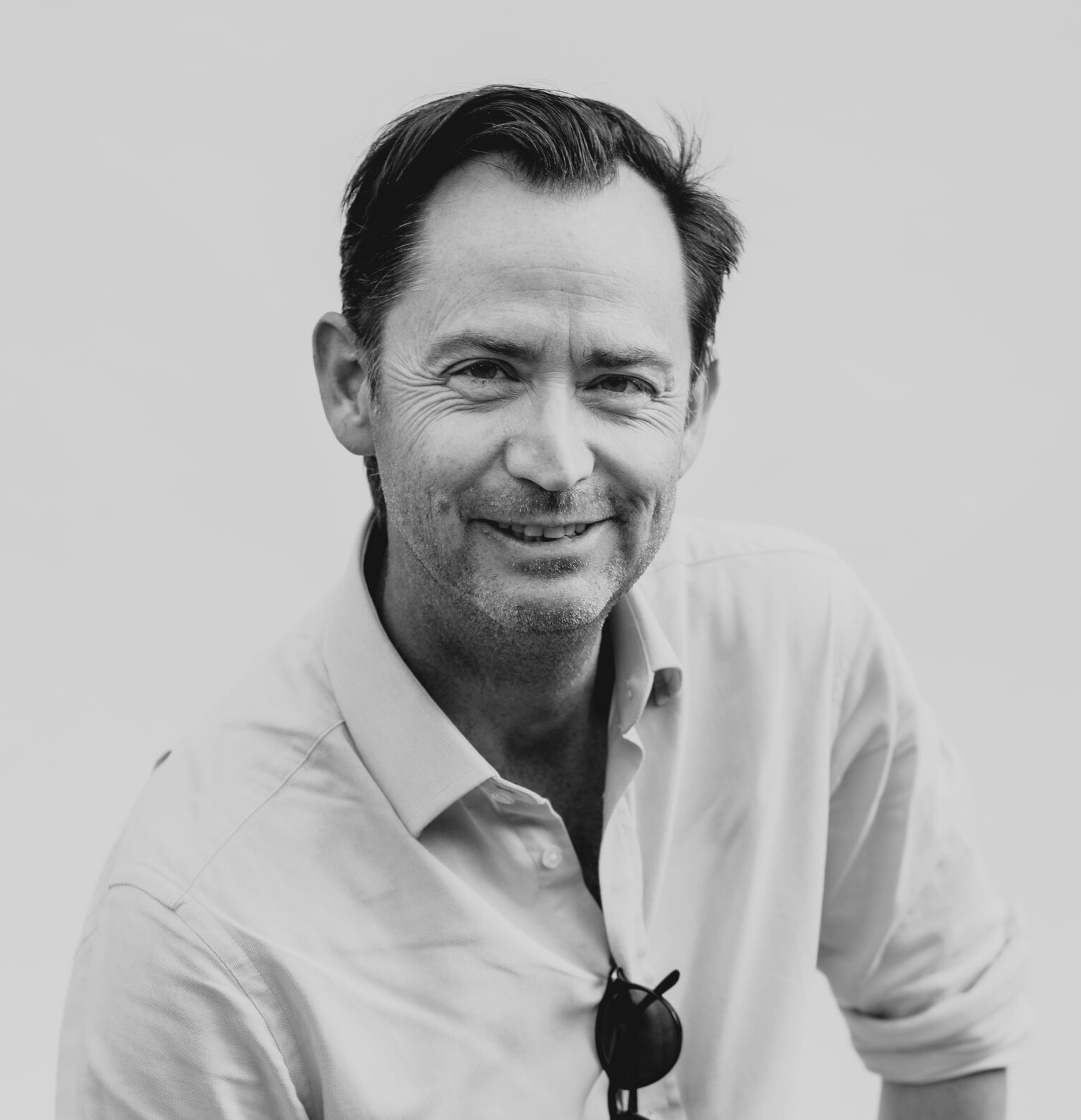
Lucas Hülsmann
May 25, 2026
It’s rare that we get to see the machinery behind a fund. Step inside the world of fund administration, and someone is working hard to reconcile every number, translate every legal term into action, and prepare reports before questions turn into problems. It’s not the visible side of venture, but it’s the part that keeps everything running.
This is the world Lucas Hülsmann works in, and it’s exactly what his company, Gaspard Partners, was created to support.
Lucas sees running a fund as about much more than investing. It’s a business with many moving parts: capital calls, legal structures, taxes, valuation policies, sanctions law, reporting, budgeting, investor relations, HR, and regulations, all working together.
For new managers, this complexity can be overwhelming. Gaspard Partners was set up to lift that burden. It’s not just software or a back office tool; it’s a real operating partner. In fact, Lucas and his colleague Lisa are the CFO and COO, respectively, for Robin Capital.
In this conversation with Lucas, we explore the principles that shaped his career, the market gap he noticed, why precision is so important in fund administration, and what new GPs often overlook when launching their first fund.
About Lucas Hülsmann
Lucas Hülsmann is a CFO and back-office leader with a background spanning consumer businesses, digital transformation, strategic finance, and alternative asset operations. Over the course of his career, he has worked across online and offline business models, from startups and digital reinvention to retail, wholesale, and third-party distribution, building a reputation for combining structured financial leadership with an entrepreneurial mindset.
When he first moved to the other side of the table, from the VC-backed Start-Ups to VC itself, he focused on developing the GP practice and advising fund managers across the full lifecycle of a fund, from structuring, modeling, and provider selection through to valuations, budgeting, and governance.
About Gaspard Partners
Gaspard Partners is a tailor-made, outsourced CFO Office, taking care of your administrative, planning and analytics tasks. The team is hands-on with fund administration, reporting, taxes, regulatory matters, investor relations, budgeting, and overall finance operations. Gaspard aims to be the single contact point for GPs, helping them manage the “other 120 degrees” of fund management with steady, clear, and consistent support.
The operating principles behind the machine
Lucas credits much of his approach to his earlier jobs, especially at Procter & Gamble. He says he learned a way of working there that still shapes his work at Gaspard today. What stuck with him was more than discipline, it was the belief that good operations rely on repeatable truths.
“You learn that there’s a correct way to load a truck or to price a product or run a meeting or to structure a new company or to enter a new market,” he says. “And, if you do it in the same way, every time, your work will run smoothly.”
From those experiences, he developed three key operating principles.
The first is simple: “Always ask when you start something, what needs to be true to deliver the desired outcome?” For Lucas, that question sits at the beginning of everything, from designing a process to building an entire business. “We won’t touch things here at Gaspard unless we know what needs to be true so that we can succeed with it.”
The second is consistency. “We have to be right first time,” as he puts it. In finance, changing the answer later is more than an inconvenience; it undermines trust. “The worst thing that can happen to you as a finance person is that you say the truth is x, and then three weeks later, you look at it again, and you say, no, the truth is x plus eight.”
The third principle is curiosity. Lucas sees this as always looking for better ways to do things and truly caring about the work. Next, is knowing your strengths and the strengths of others, and how they fit together. The last principle is anticipation, which he calls “the operating superpower in administration.”
These principles guide both the culture at Gaspard Partners and how the team serves clients. They also connect to one of Lucas’s main goals: “No pain. No pain for the client. No pain for us.”
“Always ask when you start something, what needs to be true to deliver the desired outcome?”
Why Gaspard Partners exists
Lucas founded Gaspard Partners in January 2025 to solve a clear problem: running a fund involves much more than just investing, but many managers don’t have the time, team, or experience to handle all the other parts well.
“The running of a fund is a business,” he says. “We provide a 120-degree service for that. Running a fund, 120 degrees is fundraising, 120 degrees is investing, and we run the other 120 degrees.”
The “other 120 degrees” covers a lot: accounting, taxes, international tax, reporting, regulations, investor relations, sanctions law, legal work, HR, and budgeting. None of these areas stand alone. “You play a little bit there, it has an effect here,” Lucas says.
The real challenge is not just knowing each part, but understanding how they all work together.
Lucas sees this as the real gap in the market. Fund managers already deal with the complexity of investing, they shouldn’t have to manage all the operational details on top of that.
“The solo GP’s mind is full of the complexities of the investment process,” Lucas says. “He or she should not have to add even more complexity from this ‘corporate 120 degrees’ to his brain.”
This is also why he is skeptical of purely software-led solutions. Instead, he says, “investors need someone who knows what to do, why to do it, when to do it, and what not to do.”
This is even more important for new managers and solo GPs. Bigger funds might build their own teams over time, but that takes a lot of resources, and the right people. For smaller or mid-sized funds, that’s often not possible.
“The need that we identified is to be a partner, not be a workbench, not be a software, but be a partner to the GP,” he says.
“Software doesn’t solve the problem of having a skilled operator in your team. Software makes life easier for the operator. Fund Managers need someone who knows what to do, why to do it, when to do it, and what not to do – an operator.”
What fund administration actually looks like behind the scenes
Venture capital is often seen as fast-paced and focused on big results, but Lucas reminds us that it’s the behind-the-scenes work that makes those results clear and reliable.
“Fund administration is basically the fund manager raising money once, and then accounting for that money forever,” he says.
Accounting begins well before any returns come in. At first, investor commitments are just promises, not actual cash. When the fund needs money, it sends out a capital call, and every contribution must be handled exactly as agreed. “Every dollar has to land in the right place, in the right entity, under the right terms,” Lucas explains.
This careful approach continues throughout the fund’s life. Investments must be valued, performance reported, and distribution waterfalls turned from legal language into clear math. Financial statements should do more than just meet compliance; they should make things clear.
“The goal for the fund is not just compliance, it’s clarity,” he says. “Financial statement reporting is about clarity and about creating actionable information.”
Metrics like TVPI, DPI, MOIC, and IRR don’t just appear; they come from applying accounting rules to legal documents and doing it the same way every time. Consistency is key because trust in reporting builds up over time.
“A good fund administrator turns legal agreements and the cash movements and valuation judgments and all that into information that the investors actually trust,” he says.
“There is no room for ‘roughly’ in a capital call. There’s only room for ‘exactly.’”
Why benchmarking can mislead as much as it informs
Benchmarking is common in Venture Capital, but Lucas is careful with it. He doesn’t dismiss comparisons, but warns that they’re often too broad, too loose, and people trust numbers that aren’t as objective as they seem.
“The grass is always green on the other side of the fence,” he says. “Most people who do benchmarking look across the fence, and they see very green grass on the other side.”
He warns that benchmarks can easily give a false sense of comparison. Managers often compare themselves to groups that are too broad, too polished, or not that similar. “Most of the time, you will compare to benchmarks that are not entirely objective either,” he says. “It’s not science.”
For Lucas, the real issue isn’t whether you benchmark, but whether you’re comparing yourself to the right thing. Alternative funds are different by nature; their strategy, location, stage, asset class, and investment approach all matter. A Berlin venture fund shouldn’t compare itself to every fund worldwide. Debt and equity strategies, or private equity and early-stage VC, shouldn’t be measured the same way.
“Investors invest with you because they have a specific investment hypothesis,” Lucas says. “You need to be very careful that when you benchmark, you benchmark against that hypothesis.”
Time matters too. Comparing funds of different vintages or portfolios at different maturity stages can produce the illusion of insight while masking the underlying reality. “You wouldn’t benchmark an 18-year-old football player against a six-year-old football player,” he says. “You also wouldn’t benchmark a football player against a basketball player.”
The point isn’t to ignore benchmarking, but to use it thoughtfully. Be selective, know what you want to learn, and don’t mistake easy comparisons for meaningful ones.
“You need to be very careful that when you benchmark, you need to benchmark against a hypothesis.”
Reporting, markups, and doing the work early
Quarter-end reporting is where Lucas’s approach really shows. In many companies, quarter-end means a last-minute scramble. For Lucas, that’s a sign the process wasn’t set up well.
At Gaspard, the goal is to avoid last-minute surprises. By quarter-end, “90% of our work is done.” They track portfolio news as it happens, handle updates right away, and organize data so it can be used for different purposes without having to redo it.
This is also where Lucas draws a hard line on valuation narratives. “Markups are not vibes,” he says. “They’re contracts that are in front of us plus math.”
A headline might claim a five-times markup, but that doesn’t always reflect a fund’s actual value. Security type, rights, preferences, and cap table details all play a role. “Sometimes five x is five x, but sometimes five x is 4.9 x or 5.2 x, or sometimes it’s none of that.”
The aim isn’t just to be fast, it’s to stay calm. When routine work is finished early and data is ready, the GP and administrator can focus on what really needs attention after the quarter ends.
“It shouldn’t deserve panic on day 14,” Lucas says of important or unusual items. “It should deserve attention on day five.”
This is anticipation in practice: clear calendars, fewer competing priorities, and more time for the questions that actually matter.
“Quarter-end reporting is like spring. It happens every year and is refreshing each time.”
What metrics really matter, and when
Lucas is direct when it comes to performance metrics: “Only cash is real.”
That doesn’t mean interim metrics are useless; they just need to be understood in context. As funds move through different stages, some metrics matter more than others depending on where the fund is in its journey.
For Lucas, the ultimate truth is always cash, shown by DPI and net IRR. But since it can take years to see that, managers and LPs need practical ways to measure progress along the way.
Early in a fund’s life, especially before the end of the investment period, he sees TVPI and IRR as weak indicators. J-curve dynamics distort the picture, and time-based metrics become especially unreliable when very little time has passed. “If you have little time, a time-based metric like IRR is totally meaningless,” he says.
In the early years, Lucas prefers MOIC. As the portfolio grows and early distortions fade, TVPI becomes more helpful, especially with gross IRR. In the final phase, the focus goes back to what matters most: DPI and net IRR.
Even then, Lucas cautions against relying too much on a single number. A fund’s portfolio includes companies at different stages, and those differences are important. A company that received investment six months ago shouldn’t be judged the same as one held for three years, and both can be in the same fund.
“The ones that you just invested in, you should expect nothing else but the 1x MOIC,” he says. “It would be surprising if you invested six months ago, and the company is already worth five times as much.”
That’s why he urges investors to look at both fund vintages and the ages of portfolio companies. Doing this gives a clearer view of where performance actually comes from.
“Only cash is real.”
The advice new GPs need to hear early
For first-time managers, Lucas always returns to one point: early decisions have long-lasting effects.
Setting up a fund isn’t just paperwork; it’s the foundation. Structure, legal terms, processes, and how everything fits together are hard to change later. Once the fund starts, those choices stay with the GP for ten years.
“The things that you decide until the day of the first closing is a symphony of legal terms and numbers,” Lucas says, “and you want to make them all play together beautifully.”
This is even more important because fund managers grow over time. The first fund is different from the second, and the second from the third. LPs and expectations change, and operations get more complex. But every fund still shows the quality of the early decisions.
“You decide once for a period of ten years,” he says. “And changing it later is super, super difficult.”
This is where Gaspard’s role stands out. Lucas doesn’t see the firm as an outside service desk. Instead, he wants GPs to feel like they have an internal CFO, one trusted person who coordinates everything and brings them back to what matters.
“We are the single point of contact and the single avenue into the service provider for the GPs,” he says. “Talk to us. We’ll take care of it.”
“Early precision reduces friction in later stages.”
Quick-fire round
A tool you can’t live without?
“We use a lot of sophisticated software, but at the fundamental level, it is Excel. I’m a finance guy. There are no mistakes in Excel. Not like life. Simple. That's what makes Excel so great. If you make a mistake, get all tangled up, Excel will forget, Excel will forgive, you just do it again.”
How do you recharge?
“The best is an intense time outside with my family. Skiing, mountaineering, tennis, surfing, anything that’s physically intense and involves my family.”
Advice that stuck:
“I have been blessed in life. 98% of our lives, we are blessed with the things we have. But we too often focus on the 2% that give us some grief.”
Founder or start-up that you admire:
“A start-up I met many years ago in Germany, called Betterdoc. I admire them because they identified their strategy and then focused on it. The world changed, they learned and pivoted. But every decision I saw them making came from first principles - asking what really mattered to the founders and the success of the company. With the simple question that Socrates gave us, “Why do I do this?”, they built a perfectly working machine.
When precision becomes the biggest advantage
Gaspard Partners is built on the idea that fund operations should be calm, precise, and properly designed from the start. Lucas Hülsmann brings an operator’s lens to a space often dominated by abstraction, focusing not just on outcomes, but on the machinery that makes those outcomes reliable over time.
From “right first time” to anticipation, his approach is about reducing friction, protecting time, and creating a system where both GPs and LPs can rely on the numbers without second-guessing them.
For emerging managers and established funds alike, the message is clear: the earlier you get the structure right, the easier everything else becomes.
Whether you are launching your first fund or refining an existing setup, Gaspard Partners positions itself as a true partner, not a service layer, one point of contact that takes complexity off your plate so you can focus on investing. Or, as Lucas puts it: “Talk to us. We’ll take care of it.” Get in touch with Lucas and his team today if you think he could support you.