

Nadine Urseanu
April 2, 2026
Today, we are pleased to present an exclusive interview with Nadine Urseanu. We met at the 11th Annual Goldman Sachs Disruptive Technology Symposium in London on March 3 an event that has become a central meeting point for Europe’s leading founders, investors, and family offices.
During a break at the conference, we spoke with her about her approach to investing, trust, relationships, and long-term wealth preservation.
As one of our first in-person interviews, this conversation allowed us to explore several important topics. We want to take this opportunity to say a big thank you to Nadine and the Goldman Sachs team for their hospitality and for sharing their insights.
About Goldman Sachs
Goldman Sachs is a leading global financial institution that delivers a broad range of financial services to a large and diversified client base that includes corporations, financial institutions, governments and individuals. Founded in 1869, the firm is headquartered in New York and maintains offices in all major financial centers around the world. It employs around 47,000 individuals and operates through four main businesses: global banking and markets and asset and wealth management.
Goldman Sachs Private Wealth Management specializes in creating comprehensive wealth management plans for ultra-high net worth individuals and families, as well as select institutions, including foundations and endowments. The business has USD 1.9 trillion of client assets under supervision (as of 31 December 2025).
About Nadine Urseanu
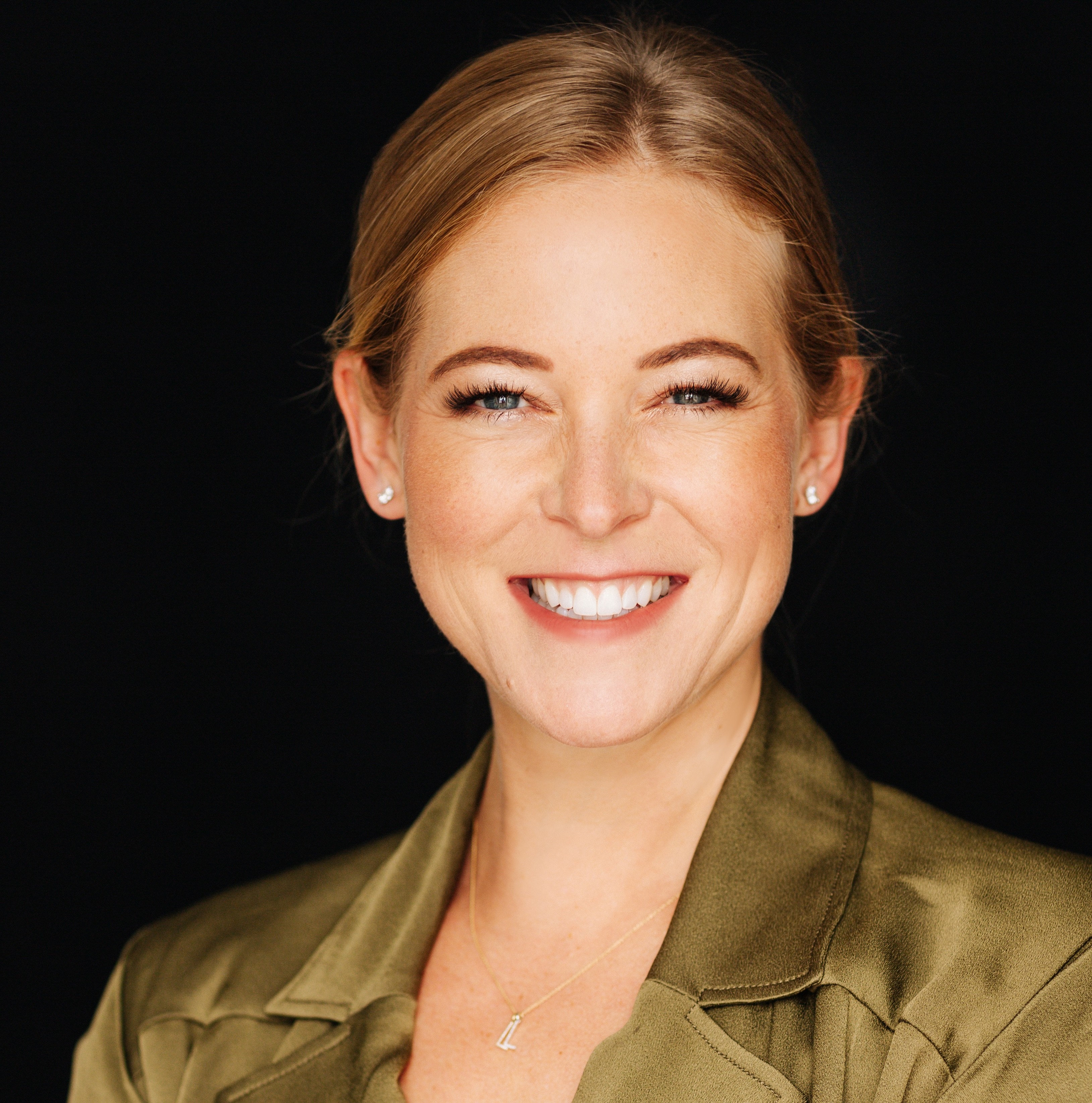
Nadine Urseanu is Managing Director at Goldman Sachs, where she serves as Co-Head of Private Wealth Management Germany. She joined Goldman Sachs in 2010 as an analyst and was named managing director in 2023. Prior to joining the firm, Nadine worked in Mergers & Acquisitions at a large American bank.
A conference built on connection, not just capital
Since we met at the Disruptive Technology Symposium, we first asked Nadine what the conference means to her. She said that this event is about more than just connecting founders with capital. What started as a smaller forum for “companies, some investors, some family offices,” has become, in her words, “one of the best conferences” at Goldman Sachs.
Its strength is the diverse ecosystem it brings together – this year 1,300 attendees – and the insights into such transformative themes as AI’s impact across cybersecurity, quantum, defense or energy. Founders connect with investors, family offices engage directly with startups, and clients access emerging ideas and sectors early.
The format is especially valuable to her German clients because the country has “outstanding founders, excellent unicorns” and a venture ecosystem that has matured significantly over time. For her, the conference is special because it reflects her view of wealth management as a long-term journey rather than a single event.
Goldman Sachs, she explains, aims to “connect relevant stakeholders across their journey,” from founding and funding a company to an IPO or sale. The conference is part of this broader relationship model, not just an annual event.
This model aligns with the “One Goldman Sachs” approach, where private wealth management, investment banking, growth investing, and other businesses collaborate from the outset to give clients access to the firm’s entire expertise and network.
Sometimes the private wealth team is the initial contact with a founder; other times, it is the investment banking team. Regardless, the objective is to connect the right people at the right time and support entrepreneurs “from A to Z.”
She and the firm have invested time in understanding the ecosystem and complex needs of founders early on, building connections across the region. The relationships that have formed over the years have grown alongside Europe’s startup scene.
As these companies have scaled through growth rounds, IPOs, and M&A, a new generation of founders, early employees, and entrepreneurs has entered the ultra-high net worth segment. “Helping these individuals transition from concentrated wealth to diversified, institutional-grade portfolios are the core of our job”, Nadine says.
“We are able to connect founders very early on and help them on their journey from A to Z.”
Building a niche with entrepreneurial instinct
Nadine began her career in investment banking before moving into private wealth management at Goldman Sachs. She joined the firm shortly after the financial crisis, which reinforced her belief that trust is paramount in finance.
She describes Goldman Sachs as having an entrepreneurial spirit, even as a global institution. “The firm does not have a very hierarchical culture, and the entrepreneurial energy allowed me to develop a distinctive practice while leveraging Goldman Sachs’ global brand”, she says. This combination helped her build both a client base and a community.
Early on, she recognized that to grow as an advisor, she needed a niche. At the time, international attention was increasingly turning toward Germany’s emerging innovation hubs, Berlin, Munich, Hamburg and beyond, so she chose to focus on that space.
This was not the safest or most obvious path. She recalls taking a risk by focusing on young founders and entrepreneurs in an evolving market. “It could also have gone wrong,” she says. A founder’s personal financial success is strongly linked to their company’s trajectory. Nadine was convinced that providing value early on and consistently supporting founders long before a liquidity event would build lasting trust within the community. This conviction remains central to her leadership philosophy.
“I really tried to provide value early on and build trust with this community.”
A new kind of wealth client
A key theme in Nadine’s work is the changing wealth landscape in Europe. Disruptive technology has created a new class of clients: first-generation tech founders who are often younger, move quickly, and are more comfortable with taking risk than traditional inherited-wealth families.
“We are observing that the profile of wealth across Europe is shifting towards a high-speed, tech-centric landscape,” Nadine says. First-generation entrepreneurs have very different needs and expectations for access, speed, and sophistication.
As a result, the private wealth advisory role is evolving. Instead of acting solely as investment managers, her team increasingly serves as strategic partners. “Founders often neglect personnel planning because they are so focused on scaling their businesses. We connect them with the right experts and help them think through their equity, tax, risks and opportunities early on”, she explains.
In practice, this starts with building a team of advisors across finance, legal and tax and facilitating communication among them so that the expertise is not siloed. These experts help founders think through their business’s future, different tax structures, family and estate plans, liquidity and long-term asset protection.
The question of how founders will spend their time after a liquidity event can also become very consuming. “We often see that successful founders have the itch to start something new, so serial entrepreneurship is quite common”, Nadine says.
This carries through into their personal investment styles. “They typically view their private portfolios as extensions of their entrepreneurial convictions and are attracted to private markets, disruptive themes like AI, and opportunities closely tied to innovation”, she notes.
Goldman Sachs provides access to its own alternatives funds and curated access to external managers as well as co-investment opportunities alongside the firm. These can become significant allocations in client portfolios.
“Our role has evolved from traditional investment managers to becoming strategic partners.”
Trust is proven in difficult markets
Nadine emphasizes that in private wealth, trust is tested during challenging years, not in prosperous ones.
Her team has guided clients through various market cycles, highlighting the COVID period as especially defining. It was both a financial and a human challenge.
During this time, market uncertainty was closely linked to concerns about health, family, business, and daily life. The advisor’s role extended beyond portfolio management.
She recalls being “on the phone constantly,” staying close to clients, guiding them through volatility, and helping them avoid reactive decisions.
Client calls would often happen after markets closed to ensure conversations occurred outside the intensity of trading and news cycles. And the team was always on hand to reassure investors that if their portfolio had been built properly, i.e. it was diversified, strategic, robust, then panic-selling was not the right thing to do. “Now is not the time to sell”, was a phrase she often repeated. In many cases, it was time to buy, assuming clients could do so.
She believes clients need not only technical expertise but also composure. They value clear explanations of portfolio construction, context for short-term paper losses, and support in maintaining long-term goals. Investment discipline, she notes, is integral.
She also stresses that trust requires candor. “Sometimes there’s bad news,” she says, and advisors must communicate it promptly. For Nadine, transparency is essential to building trust.
“In down years, you shouldn’t be afraid to tell clients bad news. Transparency is essential”
A global view in uncertain times
When asked about the impact of geopolitical tensions and US-Europe dynamics, Nadine distinguishes between noise and signals.
“At Goldman Sachs, we avoid basing investment decisions on headlines but rather look at long-term fundamentals”, she says. Clients are focused on global perspective, strong capabilities, and appropriate jurisdictional arrangements.
“The number of clients turning to us continues to grow. The firm has an exceptional understanding of geopolitical structures and decision-making centers, particularly in the US, which enables us to respond to clients’ needs, particularly in times of volatility”, she says.
Goldman Sachs Private Wealth Management has its own Investment Strategy Group (ISG) which helps advisors and clients navigate markets. This team maintains that the US will continue to dominate the global economy, citing the size and wealth of the economy, its productivity, the entrepreneurial culture and massive investments in innovation and R&D. “This all translates into earnings per share growth that surpasses any other country, even if the technology sector is excluded”, Nadine says.
She describes the US as “a nation of founders,” characterized by risk-taking and leadership in investment practices from which Europe can continue to learn.
This conviction informs Goldman Sachs’ strategic allocation advice to maintain an overweight to US equity. That does not mean neglecting Europe or other regions. Rather, it involves recognizing where the deepest capital markets and strongest earnings are, while maintaining diversified geographic exposure.
The key principle is to avoid emotional reactions to instability. “This is also not a time to panic sell anything,” she says, especially for clients with diversified, long-term portfolios.
“My clients appreciate a very global view on markets and investment opportunities.”
Three roles, one relationship business
Today, Nadine describes her job as wearing “three hats.” She is first a private wealth advisor, working directly with clients on investment portfolios. She is also Co-Head of the German Private Wealth Management business, responsible for growth, hiring, people strategy, and franchise expansion. And she serves as Head of Goldman Sachs Bank Europe SE Private Wealth Management, a role that carries greater institutional oversight.
This results in a varied workday that includes client calls, strategic planning, recruiting and leadership discussions. Over the past eighteen months, her remit has expanded significantly.
Despite expanding responsibilities, her work remains centered on relationship management. Clients may access a broad team, but many prefer direct conversations with their advisor, whether about portfolios or personal matters.
In private wealth management, she emphasizes that engagement is not primarily driven by performance updates, as clients entrust advisors with deeply personal information.
Her teams’ focus extends to the next generation. Where sensible, clients involve their children in meetings and Goldman Sachs organizes events and educational programs for heirs to help build financial literacy and a holistic understanding of what it means to preserve, grow and manage wealth responsibly.
This approach is part of a long-term stewardship. Understanding clients involves knowing their family dynamics, life stage, priorities, and financial context.
“Wealth management is a multi-generational journey, the relationship you have with your clients is extremely important.”
The three-bucket framework for managing wealth
Goldman Sachs structures investing using a three-bucket framework: liquidity, a core long-term portfolio, and opportunistic investments.
The first bucket focuses on resilience. Liquidity management should cover living expenses for two to three years without other income, using cash, cash equivalents, bonds, or other low-risk instruments to ensure stability and access.
The second bucket is the diversified core portfolio, where long-term preservation and compounding occur. Nadine emphasizes educating clients about historical crises to help them understand both expected returns and the experience of drawdowns.
The key is not stated risk tolerance, but whether clients can remain comfortable with their portfolio during significant market declines.
Education is essential. Clients must understand the implications of being invested in global markets and experiencing losses from time to time. This knowledge allows for tailored core portfolios across equities, fixed income, alternatives, and other long-term holdings.
The third bucket is opportunistic capital, allowing clients to pursue for example direct investments in growth companies or other higher-risk positions. This bucket offers significant upside potential but also carries clear downside risk.
She emphasizes that the right mix is individual. However, the core portfolio must be strong enough that clients do not need to draw from it for living expenses or other opportunities at inopportune times. Preservation is the priority; ambition follows structure.
“We want to preserve and grow wealth for multiple generations.”
Knowing when to say no: crypto, gold and commodities
As investors seek alternative stores of value, Goldman Sachs is clear about what belongs in a strategic allocation for private wealth management clients. When asked about assets like crypto, gold, and commodities, Nadine returns to first principles.
She says, “It’s important to consider the reasons for adding an asset to a diversified portfolio: income generation, upside exposure to growth, hedging against inflation or deflation, or protection against downside risks.” By those measures, she argues, crypto, gold and commodities do not earn a role in the long-term core portfolio.
In her opinion, these assets “fall short in most of these areas” and often act as speculative vehicles rather than reliable stores of value. When included, they typically belong in the opportunistic bucket rather than the core portfolio.
Instead, Goldman Sachs advises its wealth clients to focus on assets with “tangible economic drivers,” which provide a more reliable path to appreciation. This includes US equities, noted for superior long-term earnings growth, and private markets, which the firm considers “essential for capturing alpha.”
Nadine’s role as an advisor is to protect clients from confusing speculation with strategy, rather than endorsing every trend.
“We advise our clients to focus on assets with tangible economic drivers.”
Why founders need a different kind of advisor
Nadine asserts that Goldman Sachs is “the right bank for entrepreneurs,” citing cultural fit and institutional capability as key reasons. She argues that founders want to work with people who understand risk, speed and ambition. In her eyes, Goldman Sachs has the entrepreneurial DNA to relate to that mindset. The bank understands how entrepreneurs think, how quickly they make decisions and what they need from a trusted partner.
From a capability perspective, she highlights the complexities founders face as their wealth grows. Some may need single-stock risk management after going public, while others seek access to specific US funds, venture ecosystems, or family office networks.
Goldman Sachs’ global platform enables these connections. For example, if a German family office seeks links to Bay Area venture capital, their advisor can quickly facilitate introductions through colleagues.
Nadine believes founders value this combination of understanding and execution. They seek advisors who can operate at their pace, manage complexity, and provide global access—not just asset allocation. Working with founders also comes with another challenge. Many have built their wealth by concentrating risk and backing themselves, and this can make it difficult to shift from wealth creation to wealth preservation.
She notes that founders are accustomed to controlling their companies, but financial markets operate differently. The sense of control can be misleading.
Her role often involves helping founders reframe their approach. While they may excel at spotting opportunities, the larger pool of capital should not be managed with the same instincts that built their business.
“You have to have a strong plan.”
Investing without waiting for the perfect moment
One of her most practical insights concerns deploying capital after a liquidity event.
Founders often struggle to transition from operational control to market uncertainty. After an exit, they may hesitate to invest, waiting for a perfect entry point. Her advice: do not wait for the perfect moment, as it does not exist. The tendency to delay often leads to inaction.
Goldman Sachs recommends creating a plan and execute it consistently, phasing investments over 6 to 12 months or longer, as needed.
Discipline is especially important for founders accustomed to agency. In markets, discipline means controlling processes, not outcomes.
“We cannot control geopolitics, policy changes, or short-term price movements. We can control by having a thoughtful strategy, sensible diversification, and consistent execution”, Nadine says.
Transitioning from market timing to a structured approach is crucial in post-exit wealth management. Nadine’s role is to help founders make this shift while retaining their ambition.
“Don’t wait for the right moment. Because there will never be the right moment.”
Three golden rules for generational wealth
When asked to summarize her team’s approach, Nadine highlights three principles: discipline, structural planning, and long-term commitment to high-quality assets.
The first is long-term conviction. For over twenty years, Goldman Sachs’ Investment Strategy Group has emphasized that “the most reliable engine for long-term wealth accumulation is the superior earnings growth of US companies.” Remaining invested in quality growth assets is essential.
The second rule is to stay invested. She emphasizes that generational wealth is often harmed more by poor decisions during downturns than by the downturns themselves.
“Generational wealth is often eroded not by market downturns, but by the friction of exiting and re-entering markets,” she says. In other words, the cost of losing discipline can be greater than the cost of volatility.
The third rule involves family governance. Preserving wealth across generations requires not only sound investing but also preparing heirs for stewardship, responsibility, and decision-making.
She notes that often fortunes do not last beyond three generations due to inadequate preparation of heirs. She suggests involving children and heirs early, through formal family meetings, financial education and direct conversations about what wealth means. The purpose is not only technical literacy, but the cultivation of judgment. For her, the future of wealth preservation is not just portfolio construction. It is family readiness.
“Most wealth does not last beyond three generations due to a lack of preparation among the heirs.”
Quickfire round
Tool you can’t live without:
“My calendar. It’s not just about scheduling — it forces discipline, prioritization, and protects time for what truly matters, both professionally and personally.”
Recharge ritual?
“Time with my family and kids comes first — that’s my weekend reset. And once a year, I go to Ibiza with my girlfriends. It’s my annual reset — no markets, no meetings, just laughter, sunshine and a reminder that perspective matters.”
Best advice you’ve ever received?
“Put things into perspective. Very few things are truly existential, and clarity almost always comes when you zoom out.”
Founder or startup you admire?
“I admire founders who build exceptional businesses without losing sight of their values, their families and the people around them.”
Nadine would love to hear from you
Nadine’s perspective combines close work with founders, experience through crises, and a clear understanding of private wealth management’s purpose. The goal is not just outperformance in good times, but to preserve, guide, and advise throughout a family’s financial journey.
In a market culture focused on urgency and prediction, her message is steady: build a solid plan, stay invested, focus on quality, and involve the next generation early.
For individuals facing liquidity events or generational transitions, the lesson is clear: wealth requires a strategy as intentional as its creation. Early conversations lead to better outcomes. Contact Nadine and her team in Germany to learn more.