


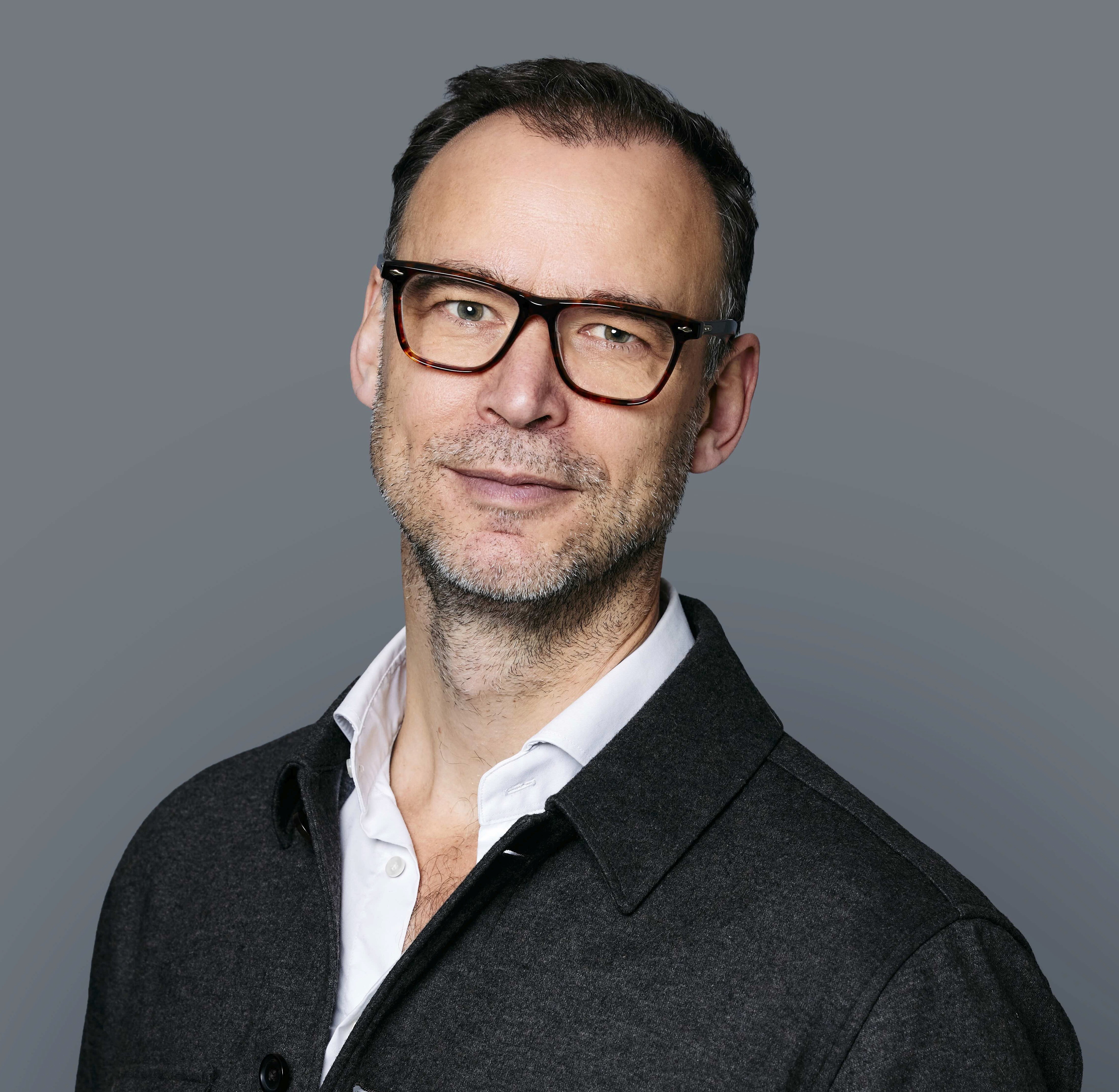
Riemer Smink
February 21, 2026
From fog to finish line
Europe produces world-class engineers, scientists, and researchers. Far fewer companies successfully turn that brilliance into global industrial scale. For Riemer Smink, that gap isn’t an abstract policy problem, but a core problem that informs his work as an investor.
As a Managing Partner and Co-Founder at FORWARD.one, Riemer has built a reputation for pairing early-stage industrial technology with relentless commercial discipline, backing founders early, leaning in hard when they perform, and stepping back just as decisively when they don’t.
With FORWARD.one’s third fund underway, he reflects on FORWARD.one’s strategy, why sales still decides who wins, and what it will take to build Europe’s next generation of industrial champions.
About Riemer Smink
Riemer Smink is a VC investor at FORWARD.one. Riemer holds a bachelor’s degree in Interaction Design, a multidisciplinary programme combining design, psychology, and programming, and later completed a Masters in Economics. Before joining FORWARD.one Riemer was a Director at Kempen & Co Corporate Finance and Chief Investment Officer at listed Wereldhave.
About FORWARD.one
FORWARD.one is the most commercially oriented Industrial Technology VC in Europe helping founders turn complex technology into scalable, investable, and market-leading businesses. With Funds I and II ranking among the top 5% of European VC funds, the firm is a coveted partner for founders building Europe’s next industrial champions.
Fund III: More capital, same operating system
FORWARD.one’s recently announced third fund may be bigger, but Riemer is adamant that scale won’t tempt the team into reinvention for reinvention’s sake.
“We raised our target €200 million,” he says, noting that the ambition stretches higher, but the philosophy doesn’t. “Effectively we have not changed strategy. We deliberately did not do so because our team is very much geared towards early-stage investing… and very much focused on commercialization.”
What changes, in his eyes, is the breadth of the portfolio, not the depth of the work. “With Fund II we invested in 20 companies,” he explains. “With Fund III it’s a little bit bigger and we aim to invest in approximately 30 companies.”
The construction behind that is explicit: “Roughly 20 to 25% of our fund is earmarked for initial tickets and 75 to 80% is really earmarked for follow-ons.”
Even with more companies, FORWARD.one’s selectivity remains fierce. Riemer describes a pipeline that is almost industrial in its volume. “On a yearly basis, we see about 2,500 new companies all throughout Europe,” he says, with a tilt toward DACH, Nordics and Benelux.
But that doesn’t mean the net widens when it comes to making a decision: “We invest in around eight of these companies.” And the discipline doesn’t stop once the check clears. “It still doesn’t mean that all 30 of them will get follow-on funding,” he adds. “We are quite ruthless with regards to who gets what.”
“We raised our target €200 million but have a hard cap of €250 million. Still we have not changed strategy.”
Conviction at scale
Ask Riemer how FORWARD.one maintains conviction across dozens of companies and he reaches for an analogy from sports. “We always say to our founders, listen, we run it like: we’re not your family,” he says. “We’re a sports team.” The implication is immediate and unapologetic: “You need to perform on the field and if you don’t perform, you will have to sit on the bench.”
In practice, that means not every company receives the same level of time, attention, or capital forever. He is unusually transparent about what happens after the initial burst of early-stage support.
“At the end of the day, of the 20 companies that are now in Fund II, we now only give love to six to eight,” he says. “That’s where we do our follow-on investment. And the rest will slowly fade out.” He’s careful to separate this from a judgment on quality: “It doesn’t necessarily mean that these companies won’t be successful, it just means that for whatever reason it is not a suitable investment for us.”
Where does that decision come from? He argues that performance has a habit of revealing itself, even when early data is messy. “What we always tend to see is that the winners really hit the milestones and keep executing them well,” he says.
“And if there’s drift, the drifters keep on drifting.”
To explain it to LPs, he uses a distinctly Dutch image: “Imagine you’re in a peloton cycling in the fog… the first two years you don’t know where everybody is. But then… the sun starts shining and you can quite clearly see where everybody stands.”
“We’re not a family—we’re a sports team.”
Why sales beats science
Riemer’s sharpest lesson from eight years of investing is also his simplest—and he repeats it with the certainty of someone who’s watched it play out in real time. “ Technology without commercialization is just expensive science. Always,” he says.
FORWARD.one wasn’t always as singularly focused on this, he admits, but outcomes shaped the fund’s identity: “That really evolved… and that further underlined our approach.”
Part of the challenge, he believes, is cultural. “In Europe, people do not appreciate sales as much as in America,” he says. “In Europe, I think it’s not considered a skill—and it really is a skill and it should be considered a skill.”
He sees the same pattern in technical founding teams: either they assume the product will sell itself,“That’s never the case”, or they try to solve the go-to-market problem with the wrong hires. “They say: we need technical sales people… and then we also always say that’s not a very good idea, because you need sales people to do the sales.”
FORWARD.one’s response is hands-on and operational. “We have a lot of operational partners and venture partners that are very sales oriented,” leaders with backgrounds “in Snowflake or Salesforce” who can help founders build the fundamentals: “Set up the right CRM system, set up the sales gates… qualify the sales leads.”
“Quite often our operational partners will be a first sales director at one of our portfolio companies for a couple of months on a day-to-day basis to really understand what kind of person needs to be hired in this role. And then help hire that person”
His favorite proof point is the story of a venture partner who stepped in as sales director for a quantum processor company. “She knew nothing about quantum,” he says, “but she knew everything about sales.” The results were hard to ignore: “She really nailed it and even managed to set up a Black Friday deal,” he laughs, “for a quantum processor that costs almost half a million per piece.”
“Commercial execution always beats technical elegance. Always.”
Ownership and milestones
Beyond commercialization, Riemer returns repeatedly to fund mechanics because, in Europe, outcomes have a particular shape. “The M&A landscape in Europe predominantly consists of exits between, let’s say, 250 and 500 million,” he explains.
For FORWARD.one, that reality forces a non-negotiable conclusion: “Ownership beats market entry.” Otherwise, he says, “your fund multiples will never work,” especially if the goal is “at least the 4x on your fund. It does not mean we do not push for unicorns, we just don’t model it in.”
That discipline extends to how FORWARD.one thinks about follow-ons and how far it will back the winners. Riemer notes that the initial check is only the opening move: “We can move all the way up to, let’s say, €30+ million to one company.”
When conviction is strongest, the firm can extend even further with co-investment structures. “If we really are convinced about the winning capacity… we always have the opportunity to set up SPVs,” he says, revealing an eye-catching example: “We are now in the process of setting up a 100 million SPV for one specific company.”
Still, patience is conditional, especially in capital-intensive categories like robotics and industrial tech. “You need to really discuss the budget, the forecast plan and… the milestones,” he says. “You cannot repeatedly miss milestones and it starts to become a problem. And then we will also stop funding.”
“We back founders who are obsessed with results, not just ideas.”
Long timelines, big returns and the Europe-first approach
FORWARD.one models longer timelines upfront “We know that industrial tech takes time, so we model it in” but expects companies to hit the inflection points required for the next round. “You need to make sure that you think about what KPIs you need to achieve for the next funding round,” he says. “Make sure you hit those KPIs… and if that’s the case, we will lean in hard.”
When he talks about what Fund III could produce, the ambition shifts from sensible to seismic. He points to a portfolio company building a quantum chip fab and frames it with an ASML-like scale.
“We are now building a lab that will make quantum chips that are €50 million per piece,” he says, adding that later generations could reach “€300 million per piece.”
He’s candid about where such a company might list. “Most probably to the US stock exchange… the depth of the market is not there in Europe,” he says.
But the goal stays European: “It will remain here… still being European.” And ultimately, he comes back to the why: “These are clear outliers… these are the companies that we really need to create in Europe.”
Quick-fire round
A tool you can’t live without?
“My Garmin sports watch. I’ve set it up so my phone stays silent and only my watch vibrates, while still giving me ridiculously detailed insights into my sleep and workouts. I’m a bit addicted to checking the stats, even though my wife, who’s a GP, thinks it’s idiotic.”
How do you recharge?
“I do a lot of sports, almost on a daily basis. Race cycling and on my Zwift bike. The motivation, he admits, is as much mental as physical. “If I don’t do sports I go nuts,” he laughs. “Sometimes my wife and kids just send me out of the house because I need to do sports.”
Founder or startup you admire:
Founder or startup you admire:“SpaceX. Not just for the tech, but for the culture: speed, iteration, and a relentlessly commercial mindset. Bringing down the cost per kg sent to space is truly amazing and has opened the door to things like low-orbit satellite networks. Not great for stargazing, but innovation-wise it’s unbelievable.”
Advice that stuck:
“The best advice I ever received didn’t come from a venture capitalist but from an unexpected corner of academia. Having begun my studies in interaction design—a combination of arts, psychology and programming, a philosophy professor intervened. This quirky professor… advised me to do my Master’s in Economics at this very posh university in the Netherlands. That changed my life and I wouldn’t be here if I hadn’t taken that step.”
FORWARD.one isn’t looking for pitch-deck polish or speculative ideas waiting on regulatory shifts. It’s looking for founders already in motion. “If you’re building something in industrial tech, software or hardware,” he says, “just reach out.” The barrier to entry, at least at the first step, is intentionally low. Riemer is looking forward to hearing from you either via email or LinkedIn.